The Second Baby
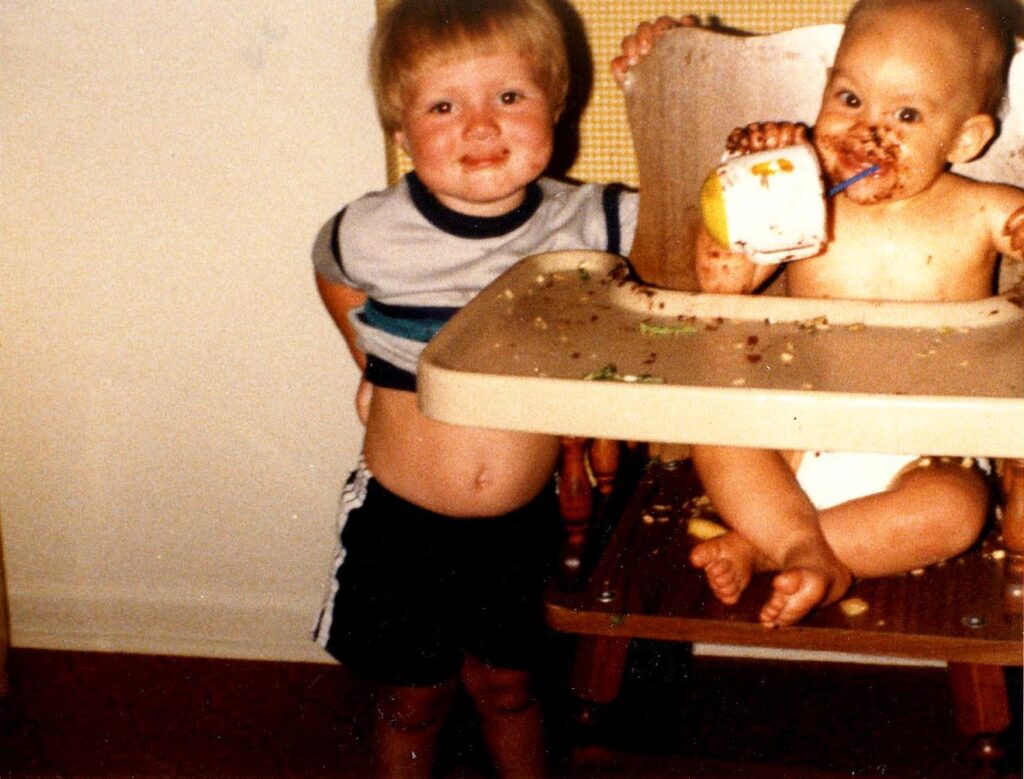
A second baby comes home to a house where the day already starts at six, with someone who wants toast cut into triangles and has no interest in the fact that the night went to feeding a newborn every two hours, and the day keeps that shape until bedtime, which is now two bedtimes in two rooms that both need the same adult. The long empty stretches from the first time around, the couch with a show on low and a nap at eleven in the morning because nothing else needed doing, mostly don’t happen.
Most of what gets written about a second baby is about the older child’s feelings, the gift from the baby, the special outing, the regression that turns up a few days in when the visitors have gone home (there is a whole post on that side of it here, “A Little While Later< A Little While Later >“). The families I visit with a toddler in the house tend to ask about something more practical, which is: how the adult who just gave birth is supposed to recover while somebody small still needs lunch, a bath and a ride to daycare.
The bleeding, the stitches or the incision, the sore back from feeding and the instruction not to lift anything heavier than the baby are all the same as the first time, except that the heaviest thing in the house now weighs 30 lbs., wants to be carried up the stairs, and has never heard of the rule. Most families work out their own fixes in the first week, the toddler climbing into the car seat by themselves while someone counts to ten, a step stool parked next to the tub so nobody has to be lifted in, the stairs turned into something the older one does alone and slowly with an adult one step behind.
The hardest hour in a lot of these houses is around one in the afternoon, when the toddler’s nap and the newborn’s long contact nap land on top of each other and the parent who is meant to be resting ends up on the couch with the baby asleep on them, listening to the older one sing in the next room instead of sleeping and working out whether getting up will wake one child or the other. Feeds have the same problem. A newborn feed can take forty minutes, which is a long time to ask a two-year-old to wait, so the couch gets stocked in advance with water, a phone charger, the remote, a bin of books and a snack box the toddler can open without help, and the older one learns that feeding time means being read to with one hand, the book held at a strange angle over the baby’s head.
A partner who could take over completely the first time, sitting up with the baby and bringing plates of food to the couch, is usually on the toddler shift the second time, which means drop-off and pickup and the Saturday morning at the park and bath and stories at seven, and sometimes back at work within a few weeks. The person who gave birth then spends long parts of the day alone with a newborn while the rest of the household is out or busy, eating cereal that went soft while the baby latched.
In Quebec a lot of families keep the older child in daycare through parental leave, for the routine and the friends and because a subsidized spot is not easy to get back. Some cut back to three days a week. Drop-off in the first weeks is its own small project, with a newborn who either comes along or gets left with someone, a car seat to carry, and by November two sets of winter clothes to get on before anyone leaves the apartment.
A doula shift in a house like this is often lopsided. Half the visit might go to the toddler, a block tower on the kitchen floor and then the slow walk to the park and back, so the parent can sleep or feed without someone climbing on them, or so they can have twenty minutes alone with the older child while somebody else holds the baby. Families are sometimes a little apologetic about asking for this, and say so while handing over the bath towel.
Brenda Volling at the University of Michigan went through thirty studies of firstborn children around the arrival of a sibling, and the picture that came out of them was a lot less uniform than the advice suggests. Some children had a rough stretch, some made developmental jumps in the same months, and some didn’t seem to change much at all. The one fairly consistent finding was a drop in the older child’s affection and responsiveness toward their mother (the parent nearly all of those studies looked at), while sleep problems, anxiety and regression showed up in some studies and not in others.
Who to call
The CLSC nurse who does the postnatal follow-up after the birth can be asked about recovery with a toddler in the house, including the lifting and the stairs [confirm the usual timing of the first postnatal visit with your local CLSC]. Info-Santé at 811 answers health questions at any hour, and Info-Social at 811 (option 2) is there for the days that feel like more than tired. The centres de ressources périnatales on the island, on the South Shore and on the North Shore run postnatal drop-ins and relevailles, which is practical help at home, and some of them will help with an older sibling during a visit [check with each centre which ones do]. Community haltes-garderies take toddlers for a few hours at a low cost and are usually booked by phone [minimum ages vary, so confirm with each halte].