The Tracking Apps
The app was infrastructure, the same logic as setting a reminder to take your medication. The alarm went off and we all ate, the baby because the alarm went off and me because I was already up.

There was a period of time with a new baby where I could not have told you with any confidence whether I was wearing socks, when I last ate something that wasn’t a granola bar consumed standing over the kitchen sink, or what day of the week it was, and I mean that in the most literal possible sense, not in the cute relatable-content way where you’re actually fine and just gesturing at tiredness, I mean my brain had genuinely deprioritized non-essential information retrieval to keep the main thing going, and the main thing was keeping a small person alive on a schedule that he had not shared with me in advance.
This is the context in which I downloaded a baby tracking app, and if you are reading this having also downloaded a baby tracking app, I want to be clear that I am not here to be smug about it, I am here because I understand completely, the app was not a crutch or a sign that you don’t trust yourself, it was infrastructure, it was the same logic as setting a reminder to take your medication, the alarm went off and we all ate, the baby ate because the alarm went off, I ate because feeding the baby got me out of the chair, and I’m not sure either of us would have consistently managed it otherwise.
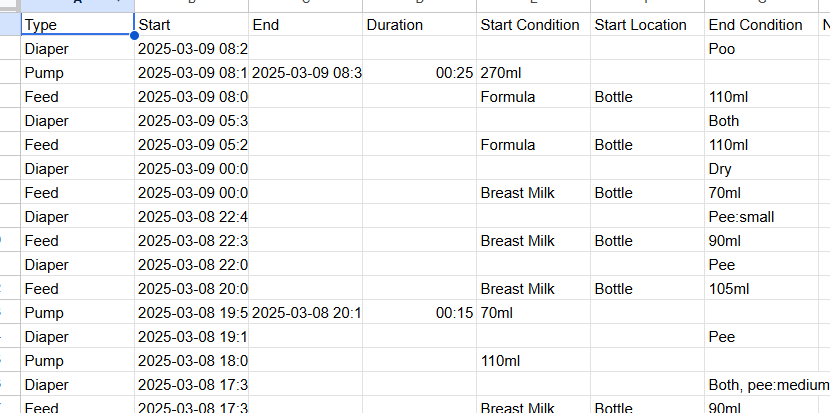
So that’s point one: the app can be necessary.
Point two, and this is for a specific kind of person, the app can also be genuinely fun, if you are the type of person who looks at a dataset and immediately wants to know what it means, which I am, I built a whole unofficial research project inside it because I had time on my hands in the way that you do when you are awake at 3am and cannot put the baby down and your phone is right there, I tried to correlate feed quantity with duration of sleep (no relationship I could find, extremely annoying), I tried correlating feed quantity with spit up (enormous relationship, very useful), I tracked poop timing because he was so regular that I eventually clocked it at roughly forty minutes post-feed with the precision of a Swiss train schedule, I paid attention to whether burping actually mattered and learned that it mattered so much that I cannot believe I ever tried to skip it, I noted that offering the less productive side at night meant less milk came through, less milk meant less spit up, but he still got enough to sleep a reasonable stretch, which sounds obvious in retrospect and took me weeks to figure out empirically, I tracked formula versus nursing in terms of how long he’d sleep after and found functionally no difference for my kid specifically, which contradicted approximately eight things I’d read online, the data was the data.
All of that came from the app, none of it would have come without the app, and I think about it now when I’m supporting families and someone mentions that they’ve been using HuckleBabyTrackerExpecting and they sound slightly defensive about it, like they’re waiting for me to tell them to put the phone down and trust their instincts, and I want to say: no, the app is great, the app taught you things about your specific baby that no book could have told you because no book has met your baby, keep the app.
Aside, look at some of the things people have done with their data:
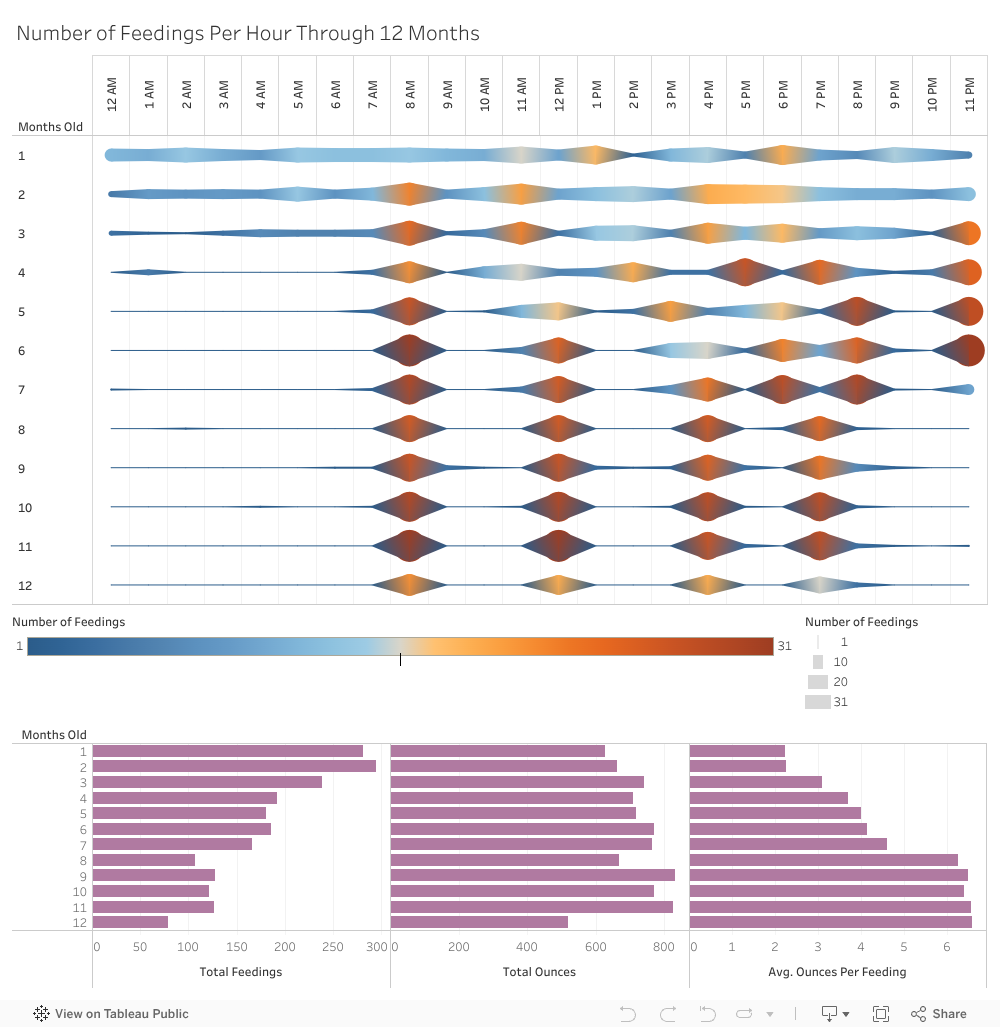
The thing I want to say, though, is that there are two ways to use it and they produce very different experiences, and you may not know what mode you’re in:
The first mode is what I’d call pattern recognition, which is what I was doing with the sleep correlations and the poop timing, you use the data to build a model of your particular baby over time, the app is the lab notebook and you are the researcher, and you arrive eventually at a set of things that are true about this child specifically, which you can then carry around in your head and act on without checking the phone.
The second mode is using the app as a schedule, which sounds similar but is actually quite different, in this mode the data tells you when to do the things: you feed the baby at three hours because that’s when the app says it’s been three hours, you try to put them down at ninety minutes because the app flagged a wake window, you are optimizing the execution of a plan rather than developing your own understanding of the person, and the problem with this mode isn’t that the app is wrong, the app is not wrong, it’s that you can end up feeding a baby who isn’t hungry, or keeping a baby awake because the window hasn’t technically opened yet, or sitting there at 2:47am watching the timer tick toward 3:00 while the baby is very clearly telling you something with their face.
I don’t think anyone slides into the prescriptive mode on purpose, I think it happens because new parenthood involves a fair amount of uncertainty and the app reduces uncertainty. It turns the undifferentiated chaos of infant behaviour into legible data, and legible data feels safer than the alternative, which is just sitting with the not-knowing and making a call, so the app becomes the authority because at least the app seems confident, and you are not currently confident about anything, including the socks situation.
The move, if there is one, is noticing when the data and the baby are telling you different things, and then at some point I don’t remember precisely I stopped checking the app as much, not because I didn’t trust it but because I’d learned enough from it that I didn’t need to anymore, which I think is what good infrastructure is supposed to do, eventually you stop noticing it’s there.
I still don’t always know if I’m wearing socks. Some things the app cannot help with.