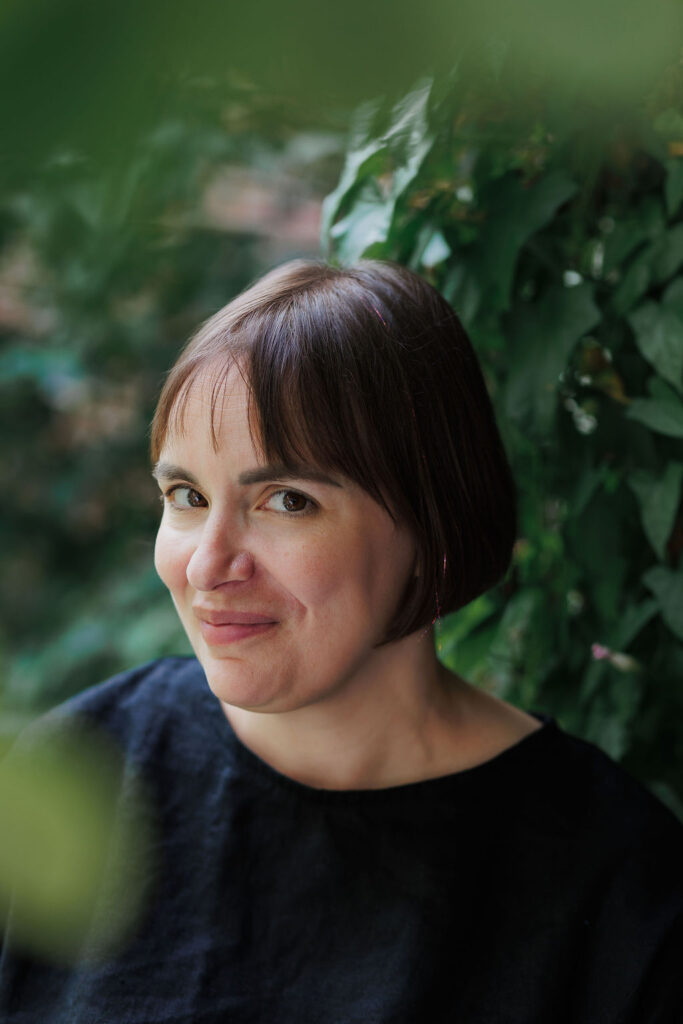
Hi, I'm Sabrina.
Postpartum doula based in Montréal, and database administrator.
The route into this work was not a straight line. Over twenty years went into IT, most of it as a database administrator, and it suited me. Systems, inputs, outputs, failure modes you could predict. Then came a baby, and the internal logic I trusted stopped returning anything useful.
The first two weeks were full of people. My partner was home, family visited, meals showed up. It felt, briefly, like a supported transition. By week three the visits tapered. By week five it was me alone in a 600-square-foot Montréal apartment at 4pm on a Tuesday, holding a baby, working out why nobody mentions the part that comes after the help leaves and before the recovery is anywhere near done.
Getting through it was possible. Most people get through it. What stayed with me was a smaller thought: this would have been easier if one person had shown up. Not to admire the baby or add another opinion to the pile, but to fold the laundry, hold the baby, and say, with some evidence behind it, that I was not doing it wrong. That thought did not leave, so I trained as a postpartum doula.
Why postpartum, and only postpartum
Birth doulas, midwives, lactation consultants, and perinatal therapists all do work I’m not trying to replicate. Postpartum is where the support gap is widest and the system does the least.
Months of preparation go into labour. Then comes a six-week checkup, a pamphlet, and an improvised stretch where sleep-deprived people try to reconcile conflicting advice while recovering from a major physical event. Sleep deprivation is a recognized form of torture. Recovery takes longer than most people are told. The mental health risks are real, and almost nobody is funded to be in your home during the first three months, when all of it is happening at once. The work of being there for that is hands-on, unglamorous, and quietly critical, and it’s the work I want to be doing.
My training and approach
My training focused on evidence-based care, trauma-informed support, and the premise that you are the expert on your own baby. My job is to support that, not override it.
In practice, it’s plain. I show up, I read what would make the day easier, and I do that thing. Dishes if dishes are the answer. Holding the baby so you can sleep, shower, or eat like a person. Answering questions when you have them, and staying quiet when you don’t. I work with nursing and bottle-feeding parents, first-timers and second-timers who are surprised this round is harder, single parents, partnered parents, and families that look nothing like a brochure. I’m bilingual, English and functional French, and I bring a documented, structured approach to the first year rather than a philosophy or a vibe.
Who I work with
Most of the families I support are in their late thirties or early forties, used to having competent systems for everything else in their lives, and caught off guard that postpartum care isn’t one of them. Some have no family nearby. Some have family that didn’t turn out to help the way everyone assumed it would. Some got here through fertility treatment. Some have older kids and forgot how relentless a newborn is. Some are doing it for the first time and are quietly, reasonably, alarmed.
What they share is wanting to trust themselves, and wanting one steady, nonjudgmental person in their corner who won’t take over, won’t vanish after week two, and will say something if something looks off. The families I’ve worked with are spread across Montréal, from NDG and Westmount to the Plateau, TMR, and Villeray. The specifics change household to household. The goal doesn’t: lower the load, cut the noise, and get you through the hard days with your sleep, your relationships, and your sense of self reasonably intact.
Outside of doula work
The database administrator job is still full-time. There’s a toddler, a partner, and a small Montréal house with too many books and not enough shelves. Doula work fits around that on purpose, at a pace that lets me show up well, with no overbooking and no heroic scheduling that falls apart the first hard week. What you get, if we work together, is someone who shows up, pays attention, and does what needs doing.
Trained, current, and still learning.
- 01Infant CPR & First AidCanadian Red Cross
- 02Breastfeeding Support TrainingStep2Education
- 03Motherwit Postpartum Doula TrainingMotherwit
- 04Infant / Toddler First Aid, Car Seat SafetySafe Beginnings
- 05Supporting Neonatal ResuscitationSafe Beginnings
- 06Deuil PerinatalLes Perseides
- 07Safe Infant SleepCribs for Kids
- 08Certified Food HandlerMinistère de l’Agriculture, des Pêcheries et de l’Alimentation
- 09Sex and Relationships After BabyErin Davidson