Why Your Baby Won’t Sleep
They spent their entire existence somewhere warm and dark with no edges, and the first thing we ask is that they lie still in a cold bright room, alone, on their back, in a box.
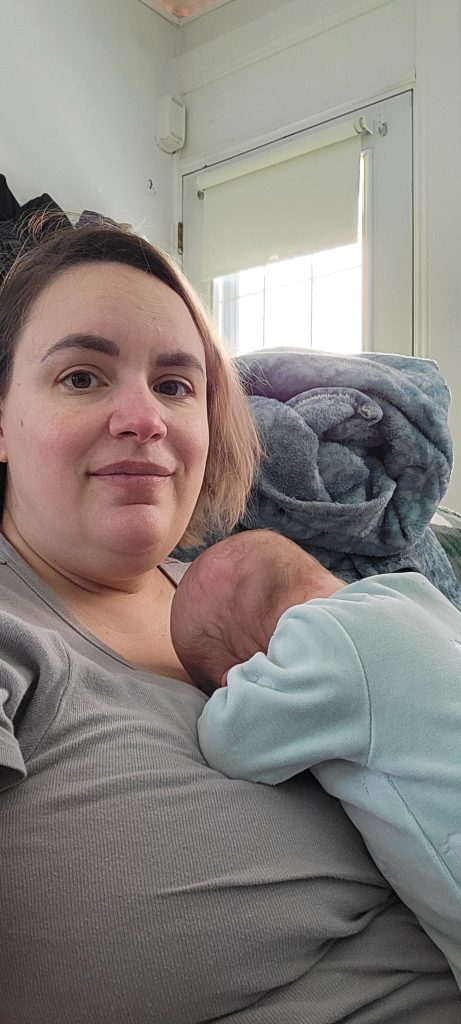
Your baby has spent their entire existence in a space that was warm and dark and moved with you, fluid pressing in on every side, your heartbeat the loudest sound in the world, no edges, no gaps, no air between you and them, and then one day they got pushed or pulled out into a room that is cold and bright and silent and enormous and full of edges, and the very first thing we ask of them is to lie still in it, alone, on their back, in a box. They cannot lift their own head. They cannot roll over. They cannot do a single thing to defend themselves if something came for them in the night, not crawl away, not call for help, not even turn their face, and somewhere in their nervous system, underneath the parts of their brain that haven’t finished growing yet, there is a very old and very accurate piece of information that says I am not supposed to be alone right now, this is not what alone is supposed to feel like, get someone, get anyone. Of course they scream the second you put them down. Of course the bassinet might as well be the moon.
Humans did not evolve to be put down.
Other primates carry their infants constantly, against the body, through the trees or across the savannah, nursing as they go, working as they go, fleeing as they go, and a baby who is being carried doesn’t need to cry to signal distress because there isn’t any distress to signal, they’re already exactly where they’re supposed to be, heartbeat to heartbeat, no decision required. We are the species that figured out how to walk upright and free our hands and then, eventually, centuries and centuries later, invented the idea that an infant should be able to self-soothe in a separate piece of furniture, in a separate room, by some number of weeks old, as if that were a milestone like rolling over or smiling, as if the baby’s own ancient wiring would simply defer to the calendar. That idea is maybe a hundred years old. The baby’s nervous system did not get the memo, and it’s not going to, because it’s not actually a flaw in the baby. It’s a flaw in our timeline.
And then there’s the part that makes all of this so much harder to sit with, which is that the back-to-sleep, alone-in-the-crib advice exists for an extremely good reason, and not a soft one, not a hedge-your-bets one. SIDS rates dropped by more than 50% in the years after the Back to Sleep campaign launched in the early nineties, and that is not a small number; that is thousands and thousands of babies who are alive because of a guideline. Room-sharing without bed-sharing, a firm flat surface, nothing soft in the sleep space, baby on their back, every single time, even for the nap you swore would only be ten minutes: this is not arbitrary, and it is not a lifestyle preference some pediatrician invented to make new parents miserable on top of everything else. It is one of the most successful public health interventions of the last fifty years and I am not going to stand here and tell you to ignore it.
So you’re left holding both of those true things at once, in the same hand, at the same hour. Your baby’s whole biology is asking to be held through the night, against you, moving, warm. The safety guidelines, which exist because they save lives, are asking for the opposite: flat, alone and still. There’s no clever reframe that makes that tension disappear, no third option that resolves it, and I think a lot of the misery new parents feel in the middle of the night isn’t confusion about which set of facts is correct, it’s grief that both sets of facts are correct at the same time and they conflict and nobody is going to resolve it for you at 3am, you just have to stand there.
What I can tell you, from being in postpartum living rooms at terrible hours, watching, listening, handing over coffee, is that the shape of what soothes your baby is not something anyone can predict from a guideline or a checklist or a app or a relative who swears by one method, because your baby is not hypothetical, they are this baby, the one in your arms right now, and they will like what they like regardless of what the literature says they should like.
Some babies go down drowsy-but-awake in a crib like it’s nothing, like it was always going to be nothing.
Some need to be rocked and swayed and bounced and sung to and walked up and down the same six feet of hallway forty separate times while you silently calculate how many hours of sleep are mathematically still possible.
Some want the swaddle, arms locked down, mummy-tight.
Some want their arms free.
Some want one arm free and the other tucked, and will let you know, loudly, if you get the ratio wrong.
And some, the one nobody can engineer or shortcut or app their way around, want only the chest of the person they love most in the world, heartbeat against heartbeat, full stop, no substitutes accepted, and will tell you so at full volume the second you try anything else.
None of these babies are doing it wrong. None of these parents are doing it wrong either, not the ones white-knuckling the safe sleep guidance through the screaming, not the ones who give in and hold through the night because it’s the only thing that’s worked since Tuesday, not the ones doing some exhausted, shifting combination of both depending on which night it is and how many hours they personally have left in them.
And this is usually where you’d expect the trick, the one weird tip babies hate that fixes everything, except there isn’t one, and anyone telling you there is one is selling something. There’s knowing the safe sleep guidelines well enough that you’re working within them instead of guessing at them. There’s letting your baby be allowed to have preferences that don’t match the pamphlet. There’s the long, repetitive work of figuring out what this kid needs on this couch at this hour of this particular night, and then doing it again tomorrow because whatever worked last week has, infuriatingly, stopped working this week. It is somehow both one of the more beautiful things you will do as a parent and also one of the most depleting, and I don’t think those two facts cancel each other out.