The Clothes

Most of the people I visit in the first month are wearing some version of the same four things. Maternity leggings with the panel folded down, a nursing tank with one clip that has stopped closing properly, a partner’s hoodie, and whatever cardigan was nearest the bed when the baby woke up, which works fine while the only outing on the calendar is the CLSC. The trouble shows up later, usually on the morning of the first outing that is not a medical appointment, a coffee with a friend or a baptism or a lunch where somebody from work wants to meet the baby. By nine there is a pile on the bed. Four things tried on, the jeans that went back in the drawer, and the dress that fit in a way that made them sit down on the edge of the mattress for a while before trying the next thing.
Postpartum writing tends to cover the body (what heals, what changes, what the six week visit checks) or the identity part of it, who you are now. Getting dressed sits between those two and happens every single day without anyone planning for it.
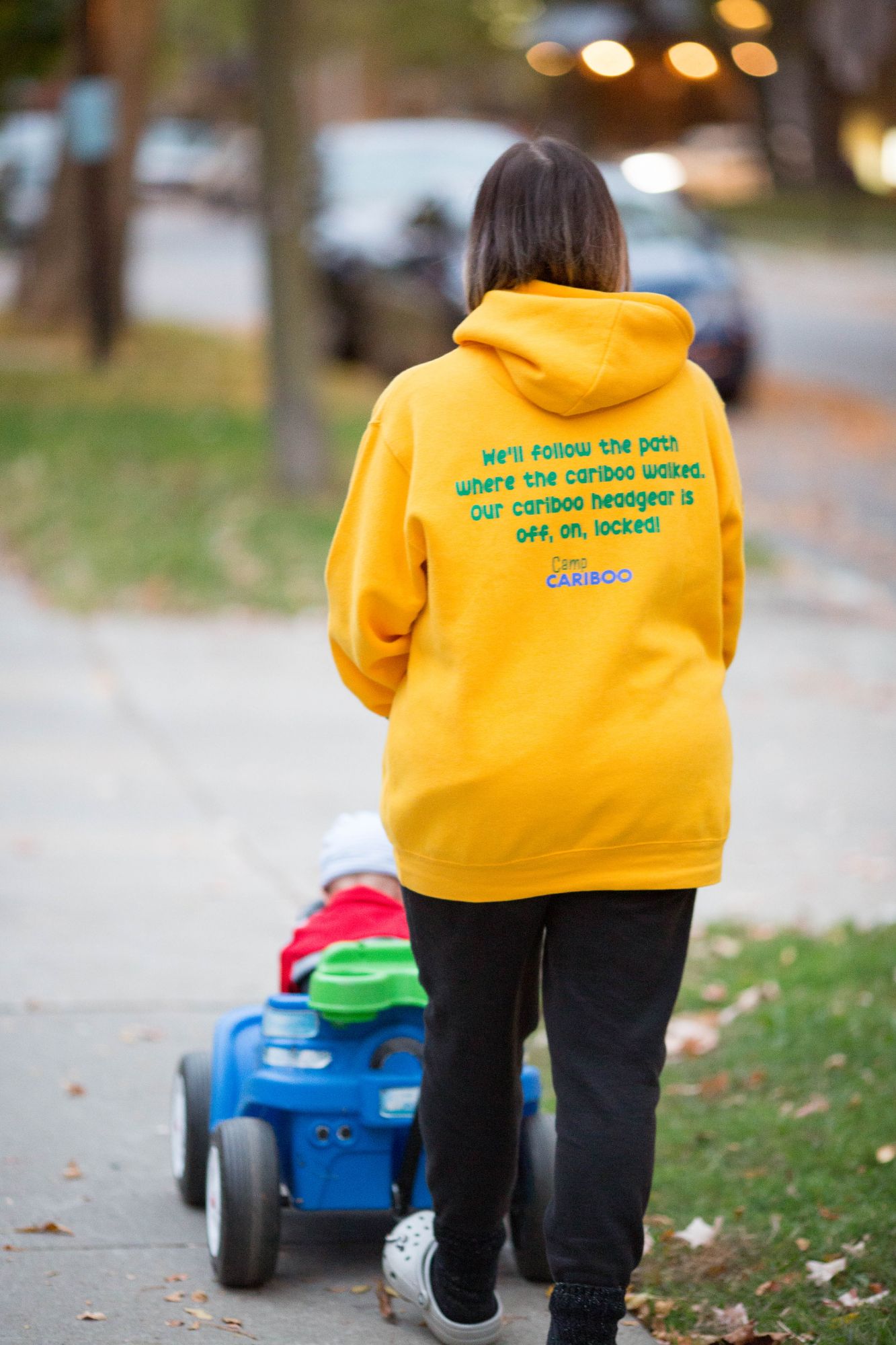
The maternity clothes are still doing the work
The leggings bought at eight months pregnant are very often still in rotation at eight months postpartum. That has less to do with the belly than with the waistband, which is soft and high and does not press on anything, and after a few months of that it is hard to give up.
The belly itself takes a long time, and for a lot of people it settles into a different shape rather than going back. A Norwegian study that followed 300 first-time parents from pregnancy to a year after birth found a separation of the abdominal muscles in 60 percent of them at six weeks postpartum and in about a third of them at twelve months, most of it mild. Mild still changes where a waistband rolls and where a fitted shirt pulls, and a pelvic floor physio can tell you what yours is doing if you want to know.

Waistbands and the scar
After a caesarean the incision sits almost exactly where most trousers close. Clients tell me the skin around it stays numb in one patch and strangely sensitive in another for months, and a seam or a metal button pressing across it is what they notice first when they try on the old jeans. What people land on tends to be one of two things, something high and soft that sits well above the scar, or something low that sits well below it. Anything that closes right on the line gets worn once and put back.
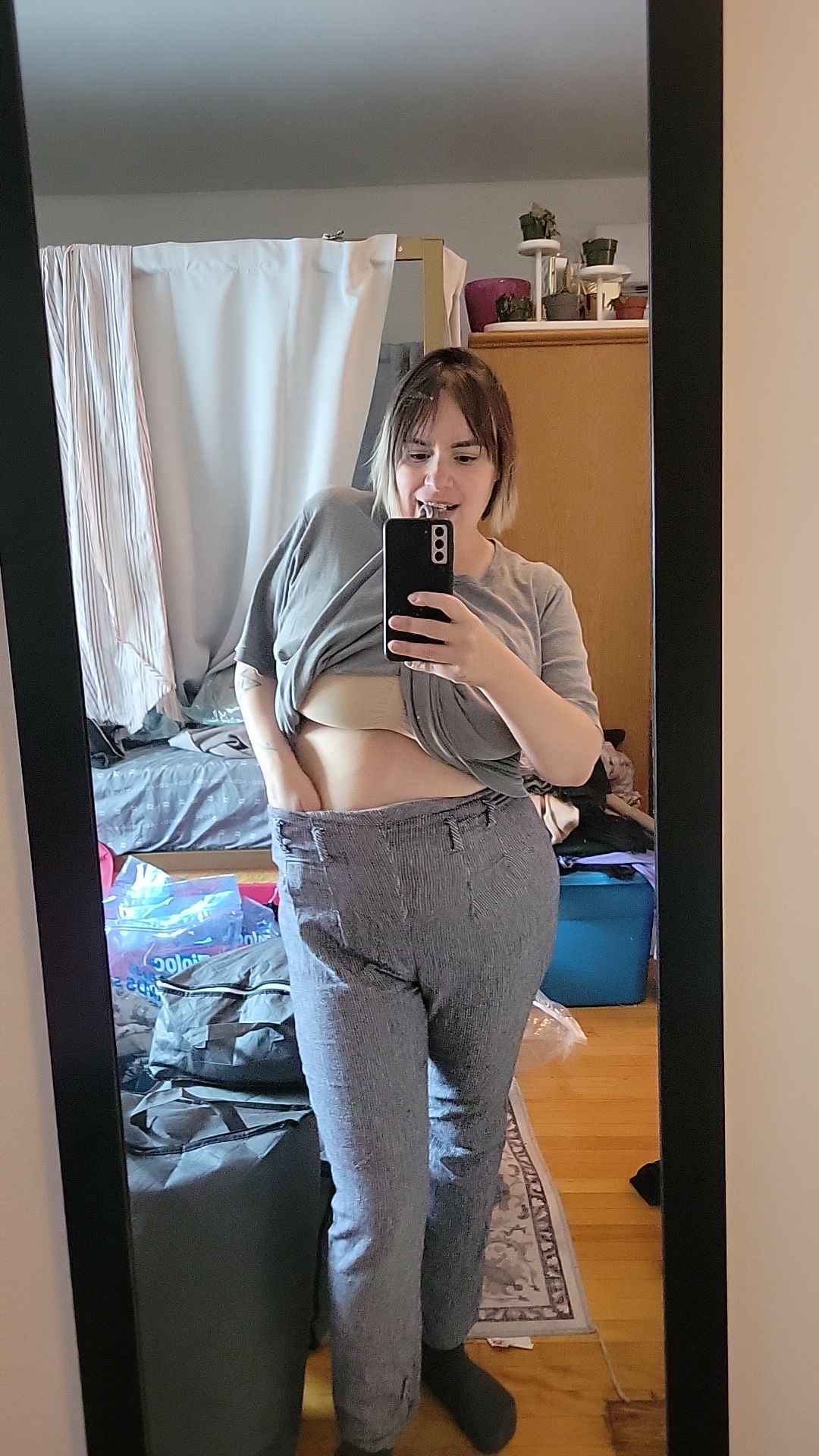

Getting a breast out in under ten seconds
For a nursing parent, a shirt has to open at the front or pull up easily from the hem, and that rules out a surprising amount of what is in the closet. Back zips, most dresses, fitted sweaters, anything with a high neck and no give. Breasts also change size across the day depending on how long it has been since the last feed, so the bra that fit at nine is tight by eleven. The combination I see most often is two layers, a tank that pulls down underneath a loose shirt that pulls up, which is not anyone’s idea of an outfit but works well enough that people keep wearing it for a year.
The feet
Shoes come up later than anything else. A small study at the University of Iowa measured the feet of 49 people early in pregnancy and again about five months after birth, and found the arches had dropped and the feet had lengthened, with most of the change coming in the first pregnancy. So the good boots at the back of the closet, the ones saved for going out, are sometimes half a size too small now and stay that way. As someone who has -ahem- invested in shoes, this is a real heartbreak.
The weight loss thread is usually a sizing question
On the parenting forums, a thread asking how people lost the weight after the baby will sit a few lines below one called “losing all sense of style.” The weight thread gets twice the replies, most of them diet plans and step counts. Read the first post, though, and it is usually the same problem as the style thread, which is that nothing fits and there is somewhere to be on Thursday.
What clients tend to arrive at, often after a few months of resisting it, is buying two or three things in the size they are now instead of the size they think they will be by spring. The resistance to it is real, since it feels like conceding something, and it is also cheaper than it sounds, because the secondhand shops and the Facebook Marketplace listings in any neighbourhood with a lot of babies are full of nursing tops worn for four months and jeans in exactly the size everyone was for a while.
What goes in which bin
Some of the most useful hours on a shift are spent next to someone sorting a closet while the baby naps in the next room. Pregnancy clothes in one bin, the pre-pregnancy clothes in another, and a much smaller pile of things that fit right now and can go back on the hangers. People hold up a pair of jeans and ask whether to keep them, and the answer is nearly always that it does not matter this week, so they go in the second bin with the lid on and the bin goes under the bed. The small pile gets hung up at the front of the closet, where it can be reached at nine in the morning with a baby on one arm.